


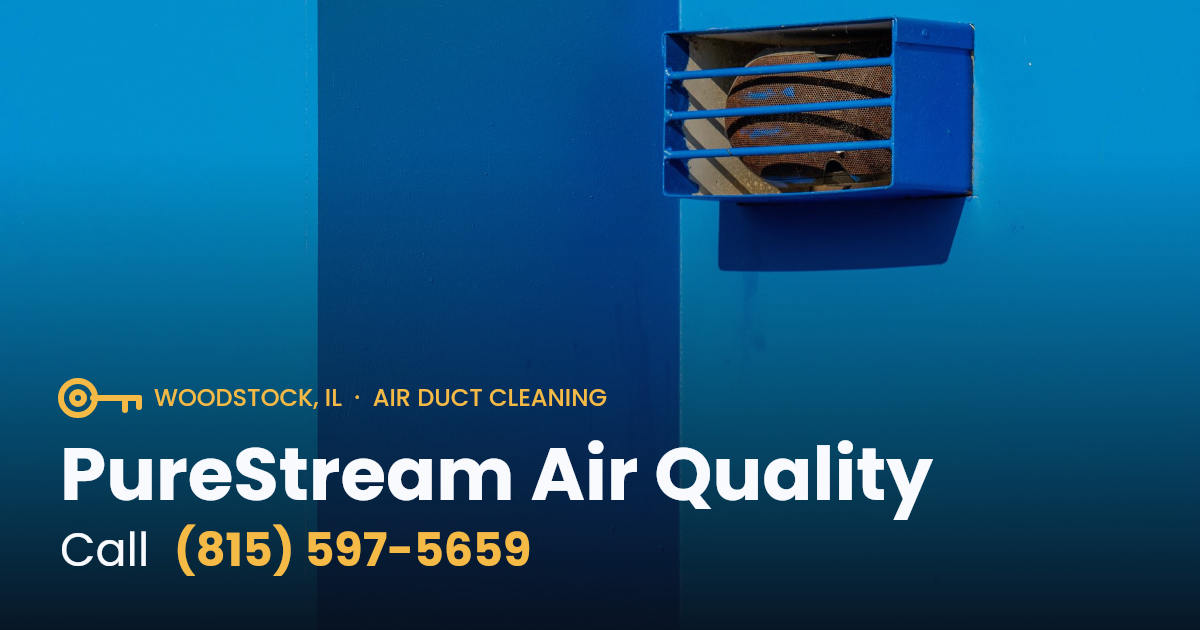
The camera doesn't lie
Last February, we ran a camera line through the ductwork of a ranch house just off Route 47 in Woodstock, and what showed up on the monitor was something the homeowner had never considered. The ducts themselves looked passable, a little dust but nothing alarming, but when we angled the lens toward the furnace plenum and caught the blower wheel in frame, the image stopped her mid-sentence. The fan blades were caked with a thick, felted layer of dust and lint that had turned them from smooth metal fins into something that looked like a child's art project gone wrong. She'd been running that furnace all winter, and every time it kicked on, that compromised blower had been working twice as hard to push half the air.
That's the call we get more often than most people expect when they think about air duct cleaning in Woodstock IL. The ducts get the attention, but the blower assembly is where the real trouble hides, and it's almost never visible until you go looking for it with the right equipment.
What blower cleaning actually involves
The blower wheel sits inside your furnace, and its job is straightforward: spin fast enough to pull air through the return ducts, across the heat exchanger, and out into your home. When dust and debris coat those fan blades, the wheel becomes unbalanced, the motor strains, and airflow drops. You might notice rooms that never quite warm up, or a furnace that cycles on and off more than it used to, or a utility bill that climbs even though you haven't changed the thermostat.
Furnace blower cleaning starts with access. We pull the blower assembly out of the cabinet, which in most systems means disconnecting the motor, loosening a few bolts, and sliding the whole unit free. The wheel itself gets brushed, vacuumed, and in stubborn cases, wiped down with a degreaser that won't leave residue. The housing around it gets the same treatment, because debris doesn't stay put. We check the motor bearings while we're in there, and we inspect the belt if your system uses one. The goal isn't just a clean fan, it's a blower assembly that spins true and quiet, the way it did when it was new.
This isn't the same job as cleaning a dryer vent, though the principle is similar: remove what doesn't belong, restore the system's ability to move air efficiently.
The warning signs most people miss
You won't see the blower wheel without opening the furnace cabinet, but you'll feel its decline in other ways. Uneven heating is the first clue. If the living room feels fine but the back bedrooms stay cold no matter how long the furnace runs, the blower may not be moving enough air to reach the far ends of the duct system. Increased noise is another tell, a rattling or humming that wasn't there before, caused by an unbalanced wheel or a motor working harder than it should.
Some homeowners notice dust accumulating faster on surfaces, or a musty smell when the heat kicks on. Both can point to a blower that's stirring up debris instead of moving clean air. And if your thermostat, whether it's an older dial model or something digital like a Honeywell Home unit, shows the system running longer cycles without hitting the target temperature, that's a sign the blower isn't keeping up.
In deep winter, when a cold snap settles over northern Illinois and your furnace runs for hours at a stretch, a compromised blower doesn't just cost you comfort. It costs you money, because the system burns fuel without delivering proportional heat.
What the camera showed us
Back at that house off Route 47, the homeowner asked how long the buildup had been there. Based on what we saw, probably three or four years, maybe longer. Dust doesn't arrive all at once. It accumulates in thin layers, season after season, until the blower wheel looks more like a lint roller than a piece of mechanical equipment. She'd been changing her furnace filter regularly, which helped, but filters catch what's coming in through the return. They don't address what's already inside the system, clinging to the blower blades and the housing around them.
We pulled the assembly, cleaned the wheel by hand, vacuumed the cabinet, and reinstalled everything. The difference was immediate. The furnace ran quieter, the air coming from the registers felt stronger, and within a day she noticed the bedrooms warming up faster. A month later, she called to say her gas bill had dropped enough that she wished she'd done it sooner.
That's the part of Woodstock air duct cleaning services that doesn't make it into most conversations. People think about ducts, but the blower motor cleaning and the fan wheel cleaning are where you often find the most return on the work.
Common questions
How often should a blower wheel be cleaned?
Every two to three years for most homes, more often if you have pets or if someone in the house has respiratory issues.
Can I clean the blower myself?
You can access it if you're comfortable working inside your furnace cabinet, but the wheel needs to be removed and cleaned without bending the blades, which takes some care.
Does blower cleaning help with allergies?
It can. A clean blower moves air more efficiently and stirs up less settled dust, which means fewer particles circulating through your home.
If your furnace is working harder than it should
Winter in Woodstock doesn't leave much room for a furnace that can't keep up. If your system is running long cycles, if rooms stay cold, or if you've noticed dust or noise that wasn't there before, the blower assembly is worth a look. We handle blower cleaning and full system inspections throughout McHenry County, and we're used to finding things that cameras and a little patience bring to light.
You can reach PureStream Air Quality to schedule an inspection or talk through what you're noticing with your system. We'll tell you what we find and what makes sense to address, without pushing work you don't need.